
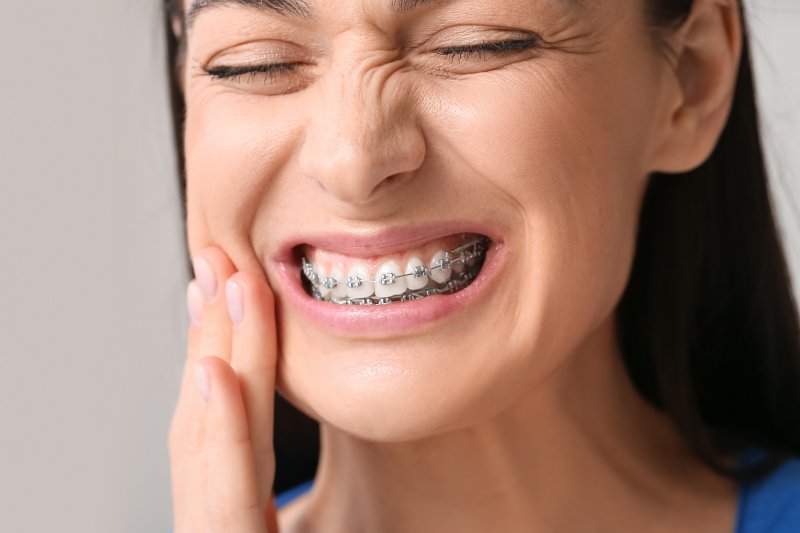
Traditional braces are a tried-and-true method for straightening your smile, but the first few weeks can come with mild irritations. One of the most common complaints from new braces wearers? Mouth sores. They’re frustrating, they can make eating and talking uncomfortable, and they have a way of showing up at the worst times. The good news is that they’re very manageable, and with a few smart habits, you can protect your mouth. Here’s what you should know.
Why Do Braces Cause Mouth Sores?
Mouth sores caused by orthodontic treatment usually fall into two categories. The first is irritation sores, which develop when the brackets and wires that make up your hardware rub against your cheeks, lips, and gums.
The second type is canker sores, which can be triggered by the stress and minor trauma of orthodontic adjustments. These aren’t contagious, but they can be painful and slow to heal.
Both types tend to be worst in the early weeks of treatment and after wire adjustments, when everything is still settling, and your tissues haven’t toughened yet.
How to Get Relief
When a sore does appear, there are several things that can help:
- Orthodontic Wax: This will soon become your best friend. Rolling a small piece over a bracket or wire that’s poking or rubbing creates an instant barrier between the metal and your soft tissue. Most orthodontic offices send patients home with it — use it generously.
- Saltwater Rinses: Simple, effective, and readily available, this remedy has you dissolve a teaspoon of salt in warm water and swish. Doing this gently several times a day can soothe irritation and promote healing.
- Over-the-Counter Numbing Gels: Topical, benzocaine-based products can temporarily numb a sore and make eating or talking more comfortable.
- Soft Foods: Changing your diet for a while can reduce the pressure on sore spots during meals. Soups, yogurt, mashed potatoes, and smoothies are great, nutritious staples to lean on.
How to Prevent Them
Prevention is easier than treatment. Here are a few habits that can help keep sores at bay:
- Apply wax proactively to any bracket or wire that feels sharp, even before a sore develops.
- Rinse with saltwater regularly, especially after adjustments.
- Avoid hard, crunchy, or sticky foods that can dislodge hardware or create a gritty texture that causes further irritation.
- Keep up with your oral hygiene. A cleaner mouth heals faster and is less prone to sores overall.
If you’re dealing with sores already, don’t give up. Most patients find that their mouths adapt within a few weeks, and sores become far less frequent as treatment progresses. If you need help, talk to your orthodontist. The end result is worth the effort!
About the Author
Dr. William “Vaughn” Holland earned his Doctor of Dental Medicine, Magna Cum Laude, from the University of Florida College of Dentistry. He also completed dual specialty certificates in both Orthodontics and Prosthodontics, making him one of only around ten such specialists in the United States. Call (904) 388-4600 to book your orthodontic appointment at Ortega Orthodontics today.